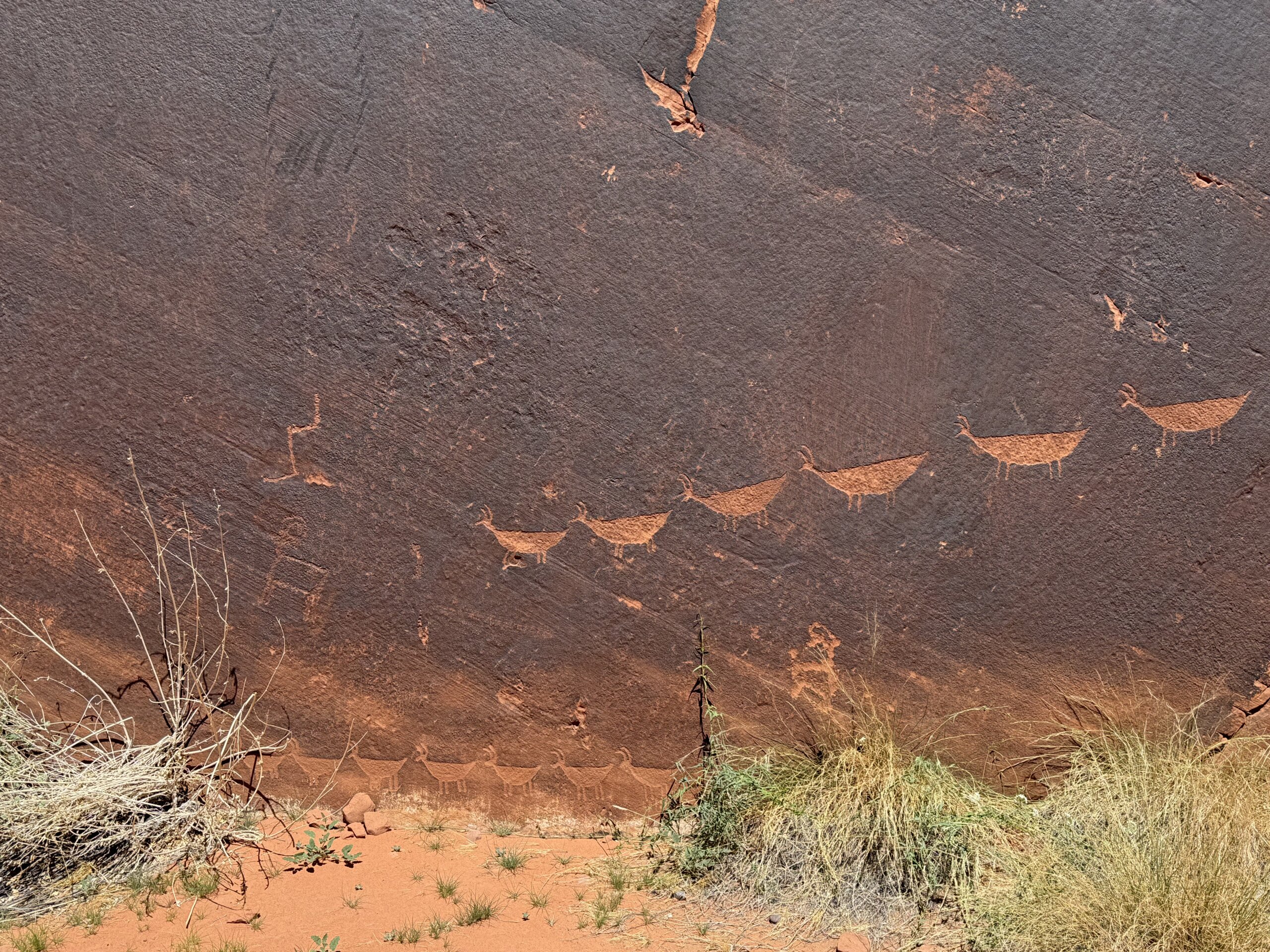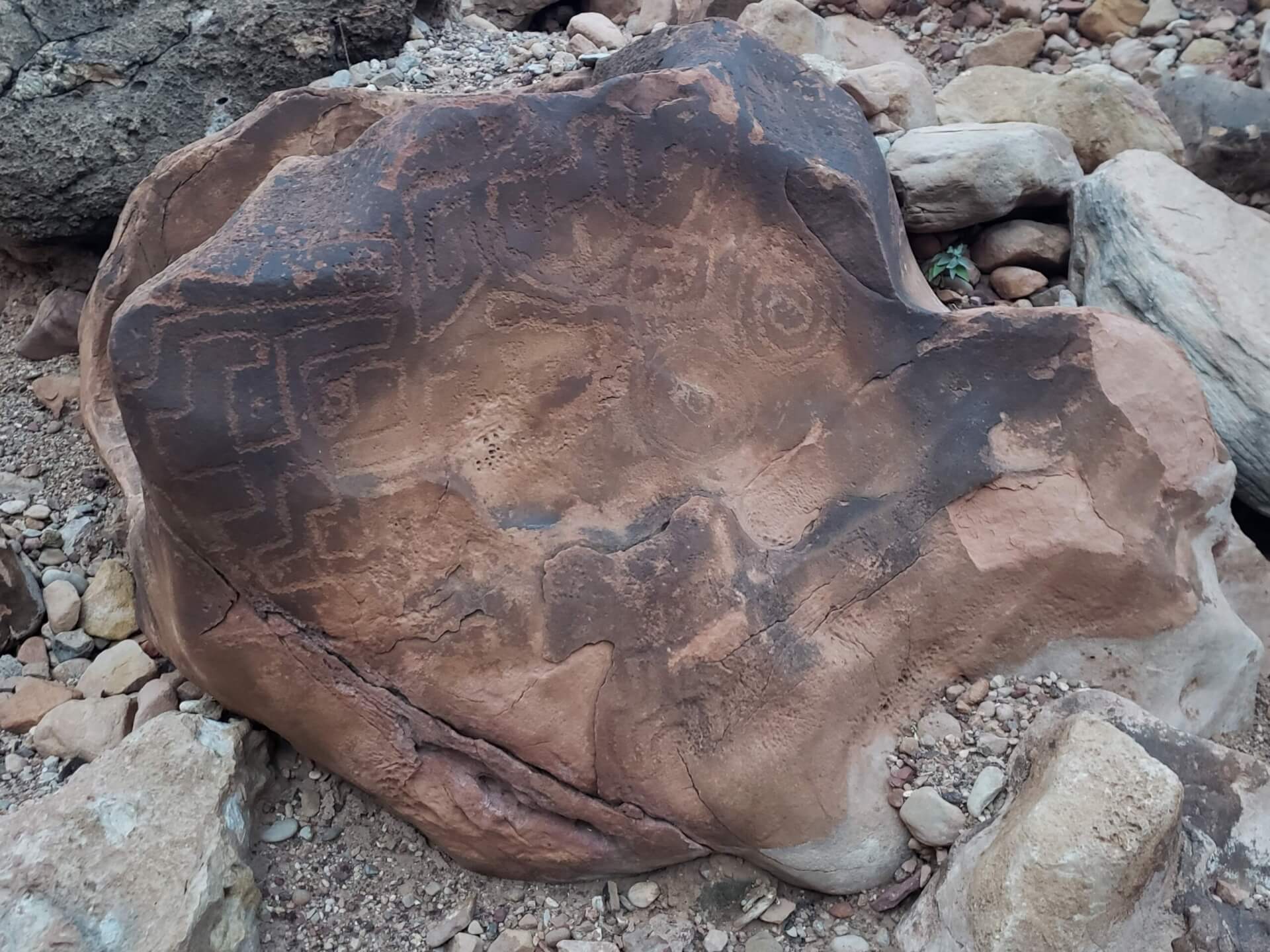
















































A faded red figure on a canyon wall can hold your attention just as completely as a roaring rapid. Look closely, without touching, and the canyon becomes more than a place to admire the scenery. It becomes a place to think about the people who have called it home.
Grand Canyon’s rock imagery is part of that human history. Often called rock art or rock writings, these painted and carved images have cultural significance that goes far beyond decoration. Grand Canyon remains a homeland for Tribal communities with enduring connections to the canyon.
Painted or carved: two ways of making an image
- Pictographs are images painted onto a rock surface using natural pigments. These are rarer as they are fragile and usually only survive in protected locations, like caves and overhangs.
- Petroglyphs are images made by carving or scratching into a rock surface. Removing a darker surface can reveal lighter stone underneath. These are found widely in open air desert environments.
These images can include human and animal forms, lines, spirals, and other designs. Learn how to look at petroglyphs and pictographs here.
Look with curiosity, and leave room for what you don’t know
A shape may look familiar, but recognizing its outline is different from understanding its meaning. Cultural knowledge, oral traditions, and the setting all matter. We can appreciate the skill and care behind an image without claiming to know exactly what its creator intended.
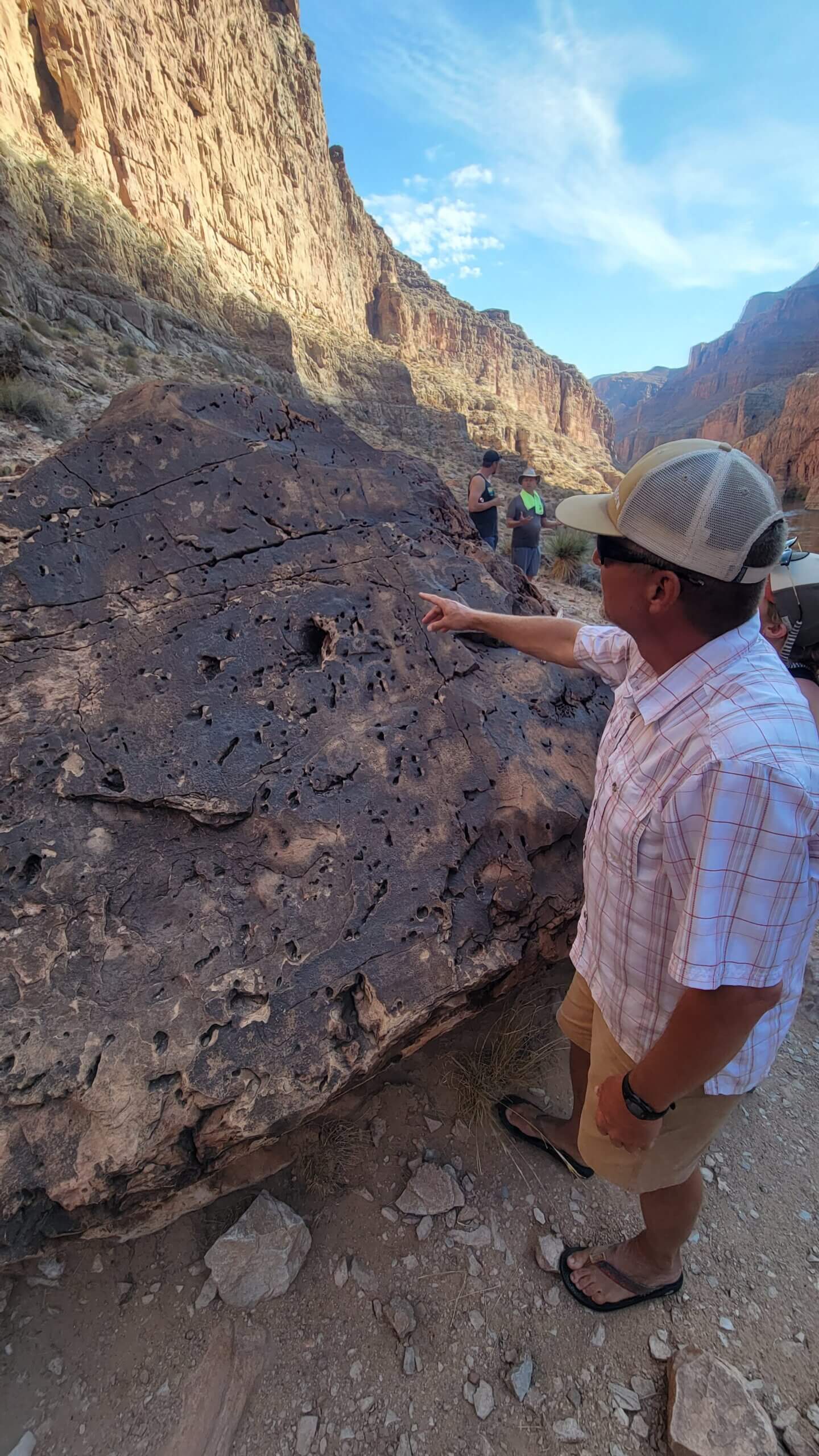
If your river trip includes a visit near rock imagery, take the opportunity to slow down and listen. Follow your guide’s directions about where to walk and where to stand. Treat the site with the same care you would bring to someone’s home or a place of worship.
Help protect what you came to see
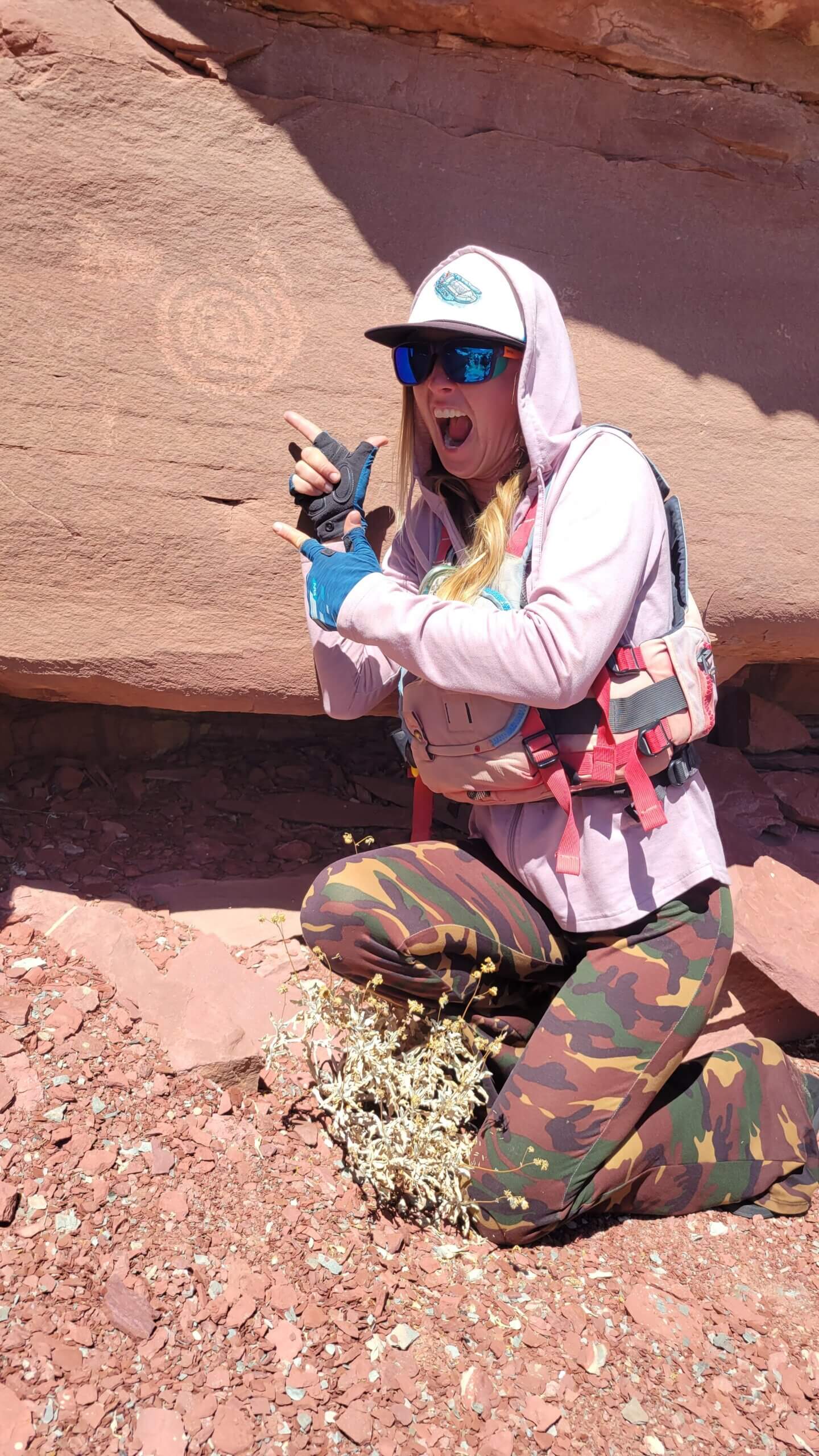
- Look without touching. Keep hands, gear, and bodies away from the images. Oils and dirt can damage fragile surfaces.
- Stay on established paths. Avoid climbing on nearby structures or moving rocks and artifacts.
- Leave the images unchanged. Never trace, wet, chalk, or add marks to make them easier to see or photograph.
Between the rapids and the sweeping canyon views, make room for these quieter encounters with Grand Canyon’s human history.